
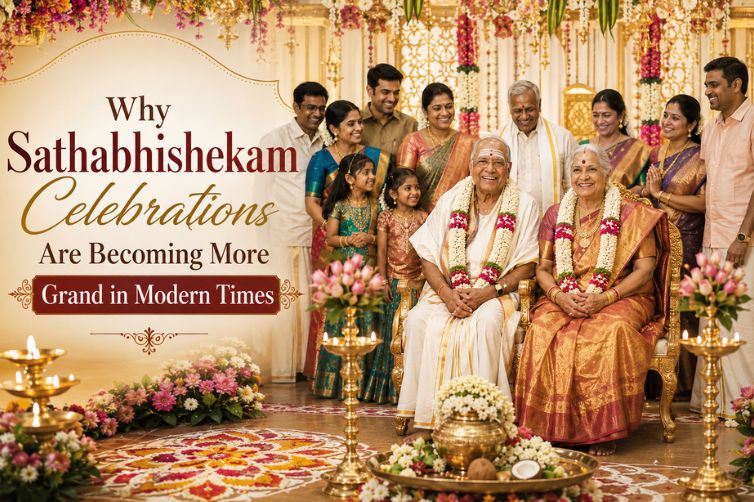
Sathabhishekam used to be a quiet, almost private function. A handful of relatives, a priest, a few hours in the morning, done. That’s changed. Families across Chennai are now treating the traditional sathabhishekam ceremony as a full-day event, closer in scale to a wedding than a small house function. VRTM, a wedding and event venue in Kovilambakkam known among families searching for a marriage hall in velachery and nearby suburbs, has watched that shift happen firsthand over the last several years.
Part of it is simple math. Three generations rarely live under one roof anymore. When grandparents, children, and grandchildren are scattered across cities or countries, a milestone birthday becomes one of the few occasions everyone can actually gather for. So families stretch it out. What was once a two-hour ritual now runs into a full day of events.
What Is a Sathabhishekam Ceremony?
A traditional sathabhishekam ceremony marks the 80th year of a person’s life. Families perform it through Vedic sadabhishekam rituals meant to bless the individual with health and long life, once the person completes 80 years. The event has grown to include a reception, meals, and photography alongside the core rituals.
Those rituals themselves haven’t changed much. What’s changed is everything built around them.
More Guests Now Means More Venue Expectations
A traditional sathabhishekam ceremony once meant close family only. Today it often means colleagues, neighbours, and friends the honoree has known for decades. That guest list can run into hundreds, which rules out a home courtyard or a small community hall.
This is where hall capacity matters in a concrete way. A venue built for large weddings, with a main hall seating 1,000 guests and reception space for up to 2,000, gives families expecting 300 to 600 people the kind of headroom a smaller hall doesn’t have. Nobody gets turned away or stuck in overflow seating outside.
The Day Now Runs on a Proper Schedule
A generation ago, the sequence was simple: rituals in the morning, lunch, everyone goes home. Now families build out a schedule that looks a lot like a wedding day for the traditional sathabhishekam ceremony. Morning sadabhishekam rituals, a mid-morning break for tea, a formal lunch, and often an evening reception with music or a slideshow of old family photographs.
Running that many segments back to back for a traditional sathabhishekam ceremony needs infrastructure that doesn’t fall apart under pressure. A dining hall seating 400 guests at a time lets a catering team turn over lunch in batches without long queues. Centralised air conditioning through the building matters more than people expect, once a Chennai afternoon function stretches past two.
Comfort for Elderly Guests Has Become Non-Negotiable
Here’s something that gets overlooked until it’s a problem on the actual day. A traditional sathabhishekam ceremony is, by definition, built around an elderly guest of honour, and a good share of the audience tends to be in the same age bracket. Stairs and long walks between parking and the hall aren’t minor for that crowd. They’re the difference between a comfortable day and a genuinely difficult one.
VRTM addresses this directly with a dual lift facility connecting its floors, along with wheelchair assistance for guests who need it. Twenty-four furnished rooms on site have become a bigger draw than they used to be too. Out-of-town relatives, particularly older guests who shouldn’t be making long return trips the same day, can simply stay over instead of travelling back and forth after a sadabhishekam rituals program that often runs well into the evening.
Food Has Moved From Adequate to a Highlight
Food at a sathabhishekam was traditionally straightforward: rice, sambar, a couple of vegetables, payasam. Functional, not memorable. That’s shifted too. Families now plan multi-course vegetarian spreads for the sadabhishekam rituals, with regional specialities and live counters, treating the meal as something guests will talk about afterward.
A pure vegetarian kitchen removes one layer of negotiation for families who want to keep the celebration strictly within traditional dietary lines. Combined with a 400-seat dining hall, catering teams can plan a full multi-course lunch as part of the traditional sathabhishekam ceremony without worrying about seating running out mid-service.
Photography Has Become a Real Budget Line
Twenty years ago, a sathabhishekam got a handful of photographs, maybe a video if someone owned a camcorder. Now photography and videography are booked well ahead for a traditional sathabhishekam ceremony, sometimes with drone coverage. Families want everything documented properly, because there is only one 80th birthday.
That expectation changes what a venue needs to offer. Natural light, clean sightlines, and open floor space for a photographer to move without disrupting the ceremony matter more than they did when photography was an afterthought.
Why the Shift Toward Grander Celebrations Makes Sense
None of this is really about extravagance for its own sake. A sathabhishekam happens once. The honoree won’t reach this milestone again, and for many families it’s also the last large gathering where every generation is confirmed present and healthy. That’s really why the celebrations have grown.
Families planning sadabhishekam rituals in Chennai are increasingly choosing venues that can handle both the ritual side and the reception side without compromise. A hall built for large weddings tends to handle the demands of a well-attended 80th birthday sathabhishekam just as capably, from guest capacity down to elderly-friendly access.
VRTM has hosted milestone celebrations, including sathabhishekam functions, alongside its regular calendar of weddings and family events in Kovilambakkam. Families comparing options among banquet halls in chennai tend to notice this kind of experience fairly quickly, since a venue built for large weddings rarely struggles with the smaller logistics of a sathabhishekam.
If your family is starting to plan a traditional sathabhishekam ceremony, make the venue decision early. Capacity, elderly access, and catering flexibility all take time to lock in, and the good dates fill up fast once the season starts.